Your cart is currently empty!
Blog
-

Pre-Ramadan Medical Checkups
With the approach of the blessed month of Ramadan, many people focus on preparing physically and mentally for fasting. Pre-Ramadan medical tests are one of the most important steps to ensure safe and healthy fasting, especially for those with chronic diseases and the elderly.
In this article, we provide a comprehensive guide to the most important medical tests and tips to follow before starting fasting.
Why are medical tests important before Ramadan?

These tests help assess overall health and determine whether a person can fast without risking their health. They also assist in adjusting medication doses and timing, particularly for patients with diabetes, hypertension, heart, and kidney conditions.
Who needs medical tests the most?
- Diabetic patients of all types
- Individuals with high or low blood pressure
- Heart, kidney, or liver patients
- The elderly
- People with chronic diseases
- Pregnant and breastfeeding women (depending on health status and doctor’s advice)
HbA1c and Blood Sugar Tests
Among the most recommended fasting tests before Ramadan, especially for diabetic patients:
- HbA1c (Glycated Hemoglobin): Evaluates blood sugar control over the past three months.
- Fasting blood sugar measurement: Important to determine safe fasting capability.
- Blood sugar can be rechecked during Ramadan to monitor any changes.
Liver and Kidney Function Tests
These tests are particularly recommended for those on chronic medications or suffering from liver or kidney conditions.
- Helps detect early deficiencies or elevated enzymes.
- Essential for adjusting medications before fasting to avoid dehydration or complications.
Lipid and Cholesterol Tests
Testing triglycerides and cholesterol is especially important for people consuming heavy meals during Iftar and Suhoor.
- Recommended to assess the likelihood of dangerous elevations.
- Helps doctors provide proper dietary advice for fasting individuals.
Hemoglobin and Iron Tests
These tests help assess anemia or iron deficiency before Ramadan:
- Low hemoglobin may cause fatigue and exhaustion during fasting.
- Recommended for women of childbearing age and the elderly.
Blood Pressure and Heart Rate Tests
- Assessing blood pressure before fasting is very important for patients with high or low pressure.
- Heart rate measurement and ECG help ensure cardiovascular stability.
Tests for Chronic Patients (Diabetes – Heart – Kidney)
- Fasting tests for heart patients include ECG and lipid profiles.
- Kidney function tests are essential to prevent dehydration complications.
- Consulting a doctor with test results is necessary to adjust the treatment plan during Ramadan.
Do elderly people need additional tests?
Yes, many elderly people suffer from chronic diseases or general weakness.
- It is recommended to perform comprehensive pre-fasting tests for seniors, including:
- Blood sugar
- Heart function
- Kidney and liver function
- Complete blood count
- Blood pressure and lipid profile
When should these tests be done before Ramadan?
- It is preferred to conduct preventive tests 2–3 weeks before Ramadan.
- This allows the doctor to review results, adjust medications, and plan diet accordingly.
- Follow the pre-fasting testing schedule for those preparing to fast.
How do tests help ensure safe fasting?

- Prevent sudden complications such as low blood sugar, dehydration, or high blood pressure.
- Provide a scientific assessment of one’s ability to fast safely.
- Encourage adherence to treatment and dietary plans throughout the month.
Tips for Healthy Fasting Preparation
- Do not start fasting without consulting your doctor before Ramadan.
- Use blood sugar and cholesterol tests to adjust your diet before fasting.
- Drink sufficient water between Iftar and Suhoor.
- Do not neglect pre-fasting tests, especially if you have chronic diseases.
- Follow a balanced diet rich in fiber and protein.
Frequently Asked Questions about Pre-Ramadan Medical Tests
Should a patient fast while taking the tests?
Some tests, like fasting blood sugar, require fasting, while most other tests do not.
Can the patient postpone tests until after Ramadan?
This is not recommended, especially for patients with chronic diseases who need to stabilize their health before fasting.
Are last year’s test results sufficient?
It is preferable to repeat tests before each Ramadan to update the health assessment.
Conducting pre-Ramadan medical tests is not just a routine procedure; it is an essential preventive step to ensure healthy and safe fasting. Whether you have a chronic disease or not, checking your health status before starting fasting provides peace of mind.
At Advanced Cell Labs, we provide all necessary pre-fasting tests with high accuracy and fast results, along with specialized medical consultations.
Book your test now and prepare for Ramadan with better health!
-

Stress & Fatigue Screening
In an era where life is moving at a fast pace, many people suffer from symptoms of stress and fatigue without realizing that these feelings may be linked to serious health issues. Therefore, it has become essential to conduct stress and fatigue tests to detect any hormonal or physical imbalances caused by chronic psychological pressure.
In this article, we review the most important tests provided by Advanced Cell Labs in Saudi Arabia.
What is the relationship between stress and physical health?

Chronic stress not only affects mental well-being but can also lead to disorders in the heart, nervous system, and endocrine glands. For example, elevated cortisol levels can cause high blood pressure, sleep disturbances, and immune dysfunction.
When do you need a stress test?
You may need stress and fatigue tests if you experience:
- Persistent fatigue without a clear cause
- Sleep disturbances
- Severe mood swings
- Sudden heart palpitations
- Reduced concentration and memory

Cortisol Hormone Test
The cortisol test measures the level of this hormone secreted by the adrenal gland, known as the “stress hormone,” which helps the body cope with physical and psychological stress.
The test is often requested in the morning when cortisol levels are highest, and may be repeated in the evening for comparison. It helps diagnose conditions such as Addison’s disease (low cortisol) or Cushing’s syndrome (high cortisol).
The test can be performed using blood, urine, or saliva, and factors such as stress, medications, and sleep can affect accuracy. Therefore, follow your doctor’s instructions before the test.
Adrenaline and Noradrenaline Tests
The adrenaline (Adrenaline) and noradrenaline (Noradrenaline) tests measure hormone levels secreted by the adrenal gland in response to stress or danger, known as the “fight or flight” hormones.
The test is usually conducted via 24-hour urine collection or blood sample and is used to diagnose disorders such as adrenal gland tumors (e.g., pheochromocytoma) or unexplained high blood pressure.
It is important to stop certain medications and caffeine before testing, as they can affect results. Below is a simplified table comparing adrenaline and noradrenaline in terms of function, source, and body effects:
Comparison Adrenaline Noradrenaline Other Name Epinephrine Norepinephrine Source Adrenal gland (medulla) Sympathetic nerve endings + adrenal gland Main Function Stimulates the body during stress or danger (fight or flight) Regulates blood pressure and increases blood flow to organs Effect on Heart Increases heart rate Increases heart contraction strength Effect on Blood Vessels Dilates vessels in muscles and constricts in skin Constriction of blood vessels to raise blood pressure Effect on Respiration Dilates airways Less effect on respiratory system Response to Stress Fast and strong More stable and sustained Medical Use Treat severe allergies (anaphylaxis) and asthma Treat severe hypotension Note: Abnormally high levels of either hormone may indicate an adrenal gland tumor; hence, these tests are used for diagnosis.
Adrenal Gland Tests

The adrenal gland is responsible for secreting cortisol and adrenaline. Function tests help detect diseases such as Cushing’s syndrome or adrenal insufficiency.
Sleep Tests
Sleep disturbances are often indicators of stress. Activity tracking devices can evaluate sleep quality and detect chronic insomnia.
Blood Pressure and Its Variations
Sudden or sustained high blood pressure is a sign of chronic stress. Regular monitoring can reveal the effects of stress on the heart and blood vessels.
Resting Heart Rate Test
An elevated resting heart rate may indicate ongoing psychological or physical stress.
How to interpret stress test results?
Doctors interpret results based on normal ranges for each test and consider the patient’s medical history and accompanying symptoms. Prolonged elevated cortisol or adrenaline levels should not be ignored.
Difference Between Physical and Psychological Stress
- Physical Stress: Results from physical fatigue or chronic illness.
- Psychological Stress: Related to emotional and mental state, affecting hormones and immunity. Both types can cause overlapping symptoms and require targeted tests to determine the exact cause.
Does stress affect other tests?
Yes. Stress may alter results of tests such as blood sugar, blood pressure, thyroid function, and general blood tests. Therefore, it is important to inform your doctor of any psychological stress before testing.
Tips Before and After Testing
- Avoid caffeine before testing.
- Try to relax for at least 30 minutes before sampling.
- Inform your doctor of any medications or supplements you take.
- After testing, discuss results with your doctor to determine a stress management plan.
Frequently Asked Questions About Stress Tests
1. Can stress be measured accurately?
Yes, through hormonal tests such as cortisol and sleep tests.2. Can stress cause chronic diseases?
Yes, chronic stress can lead to heart disease, diabetes, and immune disorders.3. How often should stress be tested?
It depends on symptoms and medical history, but testing is recommended when experiencing persistent fatigue or health changes.Stress and fatigue tests are an important step in maintaining the balance of your physical and mental health. Don’t wait until symptoms worsen—take the appropriate tests at Advanced Cell Labs to receive an accurate and comprehensive evaluation of your condition. Book your appointment now and start your journey towards a healthier, more balanced life.
-
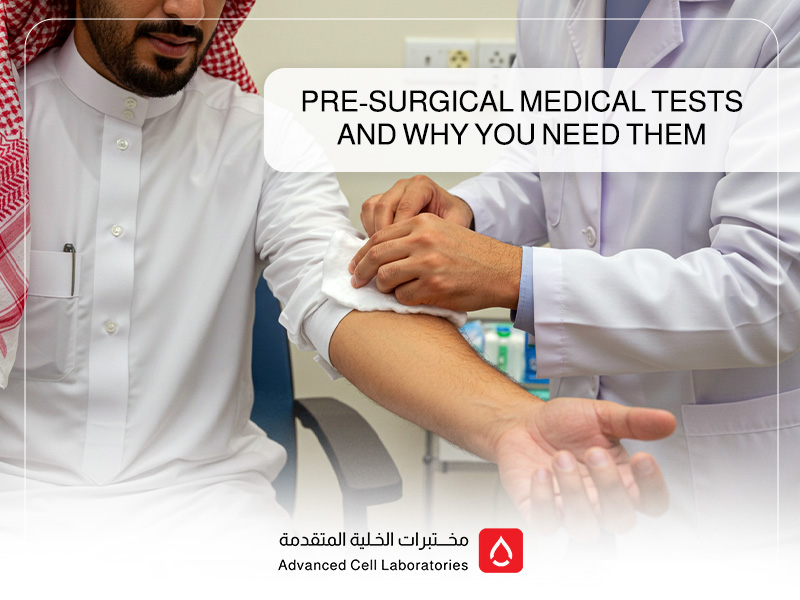
Pre-Surgical Medical Tests and Why You Need Them
When deciding to undergo any surgical procedure, a preparation journey begins that includes a set of essential tests to ensure patient safety. Among the most important are the “preoperative tests,” which play a pivotal role in assessing health status and minimizing potential complications during or after surgery.
What are preoperative tests?
Preoperative tests are a series of laboratory examinations requested from the patient before any surgical intervention. These tests aim to evaluate the functions of vital organs such as the heart, kidneys, and liver, check blood and immune status, and detect any infections or chronic diseases.
Why are these tests requested before surgery?
The main purpose of preoperative tests is to assess the patient’s body readiness to tolerate anesthesia and the surgical procedure itself. These tests also help to:
- Detect previously undiagnosed diseases.
- Prevent complications during surgery.
- Determine the appropriate type of anesthesia.
- Reduce the risk of infection.
Complete Blood Count (CBC)
The CBC test is the first required test before surgery. It measures red blood cells, white blood cells, platelets, and hemoglobin levels, detecting anemia, infections, or bleeding issues that may affect the procedure.
Coagulation Tests (PT & INR)
These tests measure the blood’s ability to clot and are essential to prevent bleeding during surgery. PT and INR tests are particularly important for patients taking anticoagulant medications.
Blood Type Test
Knowing your blood type is essential in case a blood transfusion is needed during or after surgery. This test includes determining the blood group and the Rh factor.
Kidney and Liver Function Tests
These tests examine creatinine, urea, and liver enzymes such as ALT and AST. They help evaluate the efficiency of the kidneys and liver, which are key organs in metabolizing and clearing anesthesia drugs.
Blood Sugar Tests
Checking glycated hemoglobin (HbA1c) is especially important for diabetic patients. Poor blood sugar control may lead to serious complications during or after surgery, such as delayed wound healing or infections.
Pregnancy Test for Women
Women of childbearing age are required to take a pregnancy test to ensure they are not pregnant, as anesthesia and certain medications may harm the fetus.
Hepatitis and HIV Tests
These tests detect viruses such as Hepatitis B, C, and HIV. They help protect medical staff and allow for necessary precautions.
ECG and X-rays
For patients with heart conditions or those over 40, an electrocardiogram (ECG) and chest X-ray are recommended to assess the heart and lungs.
Do tests vary according to the type of surgery?

Yes, the required tests vary depending on the type and complexity of the surgery and the patient’s health condition. For example, major surgeries such as heart or neurological procedures require different tests compared to simple same-day surgeries.
How do results help reduce complications?
Through preoperative tests, doctors can:
- Adjust the treatment or anesthesia plan.
- Postpone surgery until the patient’s health improves.
- Determine if a blood transfusion is needed.
- Prevent potential complications such as bleeding or infections.
Frequently Asked Questions About Preoperative Tests
1. What is the purpose of preoperative tests?
These tests aim to ensure the patient is in good health to safely undergo surgery and to detect any issues that may affect anesthesia or recovery.
2. What are the most common preoperative tests?
- Complete Blood Count (CBC): to detect anemia or infection.
- Blood Sugar (FBS or HbA1c): especially for diabetic patients.
- Kidney Function (Creatinine – Urea): to check kidney efficiency.
- Liver Function (ALT – AST): to assess liver drug metabolism.
- Coagulation Tests (PT – INR – APTT): to evaluate clotting and prevent bleeding.
- Blood Type and RH: in case of emergency transfusion.
- Viral Tests (HCV – HBV – HIV): for general safety.
3. Do tests differ according to surgery type?
Yes, major surgeries or those related to the heart or respiratory system may require additional tests such as:
- Electrocardiogram (ECG)
- Chest X-ray
- Pulmonary function tests (PFTs) in some cases
4. How long before surgery should tests be done?
Tests are usually requested 3 to 7 days before surgery to ensure up-to-date results, and some may be repeated if surgery is delayed.
5. What happens if a test shows a problem?
Surgery may be postponed or the treatment plan adjusted, such as changing the type of anesthesia or administering specific medications before surgery.
Preoperative tests are essential to ensure patient safety and minimize risks. At “Advanced Cell Labs,” we provide all required tests accurately and quickly using the latest medical equipment.
Book your preoperative tests now with Advanced Cell Labs and prepare for your surgery with confidence and peace of mind.