Your cart is currently empty!
Blog
-
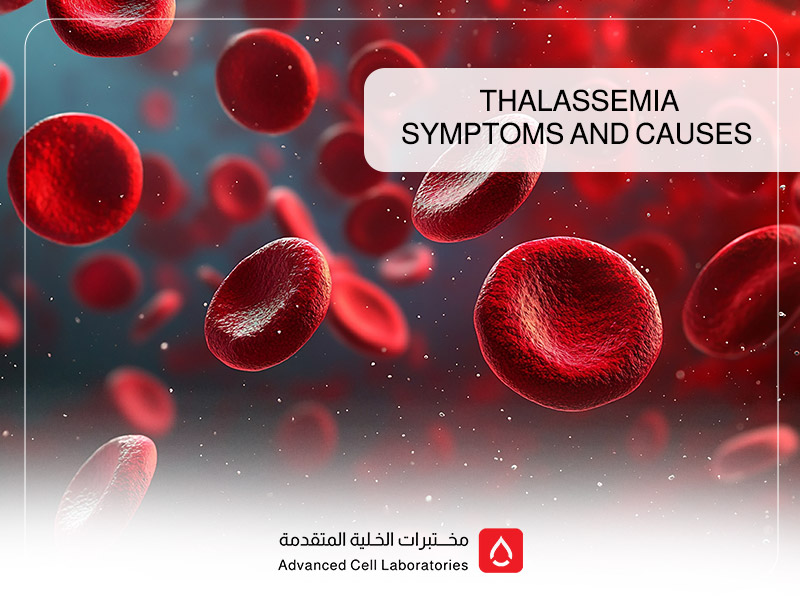
Thalassemia Symptoms and Causes
Have you ever wondered why some people suffer from persistent anemia despite proper nutrition? Thalassemia might be the answer.
In this article, we dive into the details of Thalassemia, its causes and symptoms, and how to detect it early, highlighting the services of Advanced Cell Laboratories for diagnosing and managing Thalassemia in Saudi Arabia.What is Thalassemia?
Thalassemia is a hereditary blood disorder that causes reduced production of hemoglobin —the protein responsible for carrying oxygen in red blood cells.
When hemoglobin levels drop or red blood cells are abnormal, it leads to anemia ranging from mild to severe.What is the Difference Between Minor and Major Thalassemia?
- Minor Thalassemia: A person carries one gene for the disorder and may have no or mild symptoms such as fatigue or mild anemia, often detected through a Complete Blood Count (CBC) or hemoglobin electrophoresis.
- Major Thalassemia: A person carries two copies of the defective gene, leading to severe anemia that requires regular blood transfusions and long-term treatment.
What are the Main Causes of Thalassemia?
- Genetic Factors: Inheritance of defective genes from one or both parents.
- Family History: Previous cases increase the likelihood of passing the disease.
- Consanguineous Marriage: Increases the chances of inheriting genetic mutations, making pre-marital Thalassemia screening essential.
What are the Symptoms of Thalassemia in Children and Adults?
Symptoms vary depending on the type and severity of Thalassemia and may include:
- Pale skin and constant fatigue.
- Delayed growth and development in children.
- Enlarged spleen and liver.
- Bone fragility.
- Heart problems due to chronic oxygen deficiency.
If you notice these symptoms in your child, consider performing a hemoglobin test or advanced blood tests at an accredited laboratory.
How is Thalassemia Diagnosed?
Diagnostic tests include:
- Complete Blood Count (CBC): Detects anemia.
- Hemoglobin Electrophoresis: Identifies abnormal hemoglobin types.
- Genetic Thalassemia Test: Detects mutations associated with the disorder.
- Carrier Testing: Identifies individuals carrying the gene without symptoms.
These tests can be accurately conducted at Advanced Cell Laboratories in Saudi Arabia.
Role of Genetic Testing in Detecting Thalassemia
- Genetic tests help to:
- Detect carriers early.
- Determine the specific gene mutation accurately.
- Provide medical advice for marriage and family planning.
Genetic screening has become an essential part of preventive programs and public health initiatives in Saudi Arabia.
Can Thalassemia Be Prevented?
Although Thalassemia is hereditary, prevention is possible through:
- Mandatory pre-marital screening to detect carriers.
- Genetic counseling before marriage and pregnancy.
- Pre-pregnancy testing for couples with a family history of the disease.
These measures protect future generations and reduce the spread of the disease.
Advanced Cell Laboratories’ Services for Thalassemia Testing
Advanced Cell Laboratories offers a comprehensive range of precise medical services including:- Comprehensive Thalassemia testing.
- Hemoglobin electrophoresis using the latest equipment.
- Carrier testing for Thalassemia.
- Advanced blood tests for early detection of genetic diseases.
- Mediterranean anemia testing.
Frequently Asked Questions About Thalassemia
Is Thalassemia curable?
There is currently no definitive cure, but regular blood transfusions and iron therapy significantly improve quality of life. Stem cell transplantation is an option for some cases.
Does Thalassemia affect daily life?
Patients can lead normal lives with adherence to treatment and regular medical follow-ups.
Do all children need Thalassemia testing?
Testing is recommended for children from families with a history of Thalassemia or unexplained anemia symptoms.
What is the difference between Mediterranean anemia and regular anemia?
Mediterranean anemia (Thalassemia) is hereditary, while regular anemia is usually caused by iron deficiency or poor nutrition.Don’t let hereditary diseases catch you by surprise! Schedule a comprehensive Thalassemia and genetic disease screening with Advanced Cell Laboratories.
Book your appointment today and start your journey to health security for you and your family with the best accredited laboratory in Saudi Arabia. -
Early Breast Cancer Screening (Genetic and Non-Genetic)
Did you know that early detection of breast cancer can save your life or the lives of your loved ones? With advances in medicine, we can now detect hereditary and non-hereditary breast cancer before symptoms appear, opening the door to early and effective treatment.
In this article, we provide a comprehensive overview of the importance of early screening, genetic tests, and the role of Advanced Cell Laboratories in providing the latest diagnostic services in Saudi Arabia.What is Breast Cancer?
Breast cancer is the abnormal growth of cells in breast tissue. It is the most common cancer among women, though men can also be affected at a lower rate.
Cancer develops when cells multiply abnormally, forming a mass or tumor that can be malignant. Symptoms of breast cancer include:- A lump or swelling in the breast or underarm.
- Changes in breast shape or size.
- Abnormal nipple discharge.
- Irritation or redness of breast skin.
Difference Between Hereditary and Non-Hereditary Breast Cancer

- Hereditary Breast Cancer: Occurs due to inherited genetic mutations, most notably in BRCA1 and BRCA2 genes, which significantly increase the risk of developing cancer.
- Non-Hereditary Breast Cancer: Caused by environmental factors, lifestyle, or acquired genetic changes over time, without inherited genes.
Knowing the difference helps assess risk and take preventive measures.
Why is Early Detection Important?
- Increases the chances of complete treatment with high success rates.
- Reduces the need for extensive surgery or chemotherapy.
- Preserves breast health and provides peace of mind.
- Improves quality of life and lowers treatment costs.
Thus, early screening programs are the cornerstone of global breast cancer prevention, particularly in Saudi Arabia.
What is the BRCA Test and How Does It Detect Genetic Risk?
The BRCA1 and BRCA2 test is a genetic screening that determines if you carry mutations that increase the risk of breast and other cancers. Benefits include:
- Detecting hereditary risk of cancer.
- Enabling early preventive measures.
- Planning regular screenings more accurately.
- Making personalized treatment decisions based on your genetic profile.
Advanced Cell Laboratories provides precise family history and genetic cancer testing services.
How Are Early Screening Tests Conducted?
Early detection tests include:
- Mammogram imaging to detect small tumors before symptoms appear.
- Breast MRI for high-risk cases.
- BRCA analysis to identify genetic mutations.
- Blood tests for tumor markers.
- Regular clinical breast exams by specialized doctors.
All these tests are available at top breast testing laboratories like Advanced Cell Laboratories in Saudi Arabia.
Role of Lifestyle in Breast Cancer Prevention
In addition to screenings, certain lifestyle changes can reduce breast cancer risk, including:
- Regular physical activity.
- Following a healthy diet.
- Maintaining a healthy weight.
- Reducing alcohol and saturated fat intake.
- Breastfeeding, which lowers risk.
- Avoiding smoking.
Regular self-exams and clinical screenings are also vital preventive steps.
Advanced Cell Laboratories’ Breast Cancer Testing Services

Advanced Cell Laboratories in Saudi Arabia offers specialized services including:- BRCA1 and BRCA2 analysis with the latest technologies.
- Advanced cancer testing for early detection of genetic mutations.
- Genetic predisposition testing to assess future risks.
- Advanced mutation screening.
- Periodic breast screening programs for continuous follow-up.
All with the highest standards of medical quality and result accuracy.
Frequently Asked Questions About Breast Cancer Screening
When should breast cancer screening start?
Regular screening is recommended from age 40, or earlier if there is a strong family history.
Is genetic testing useful if I have no family history?
Yes, some mutations occur spontaneously without inheritance.
Does a positive BRCA test mean I will definitely get cancer?
No, a mutation increases the likelihood but does not guarantee cancer.
What is the difference between mammogram and genetic testing?
Mammograms detect tumors, while genetic tests identify hereditary risk.
Does health insurance cover breast cancer tests in Saudi Arabia?
In some cases, yes, especially for regular screenings or high-risk women.Protect your health by taking the first step! Don’t hesitate to perform early breast cancer screening with Advanced Cell Laboratories for precise and accredited medical care.
Book your appointment now and ensure your health with the best testing laboratory in Saudi Arabia. -
Alzheimer’s Disease Awareness
Are you worried that aging might affect your memory or that of your loved ones? Alzheimer’s disease is one of the most common brain disorders among the elderly, causing a gradual decline in memory and cognitive abilities.
In this article, we will explore Alzheimer’s, its causes, early symptoms, and the importance of Alzheimer’s testing for early diagnosis, highlighting the services provided by Advanced Cell Laboratories in this field.What is Alzheimer’s Disease?

Alzheimer’s is a progressive disorder that affects brain cells, leading to memory loss, thinking problems, and social behavior changes. Alzheimer’s-related dementia is the most common type of dementia, accounting for about 60-80% of cases.
Alzheimer’s affects not only the patient but also their family, making it a major health issue that requires early intervention.What is the difference between Alzheimer’s and Dementia?
- Dementia: is a general term used to describe a decline in memory and other cognitive functions.
- Alzheimer’s: is a type of dementia and is the most common one.
In other words, not all dementia patients have Alzheimer’s, but every Alzheimer’s patient has a form of dementia.
What are the main causes of Alzheimer’s?
The exact causes of Alzheimer’s are not fully known, but several factors increase the risk, including:
- Genetic Factors: Having a family history of Alzheimer’s increases the likelihood of developing it.
- Aging: Advancing age is the most significant risk factor.
- Environmental Factors: Such as lifestyle and health habits.
- Chronic Diseases: Like high blood pressure, diabetes, and heart disease.
- Family History of Neurological Disorders: Such as certain genetic mutations.
What are the early signs of Alzheimer’s?
It’s important to recognize the early signs of Alzheimer’s, which include:
- Difficulty remembering recent information.
- Confusion in familiar places.
- Loss of decision-making ability.
- Difficulty performing simple daily tasks.
- Unexplained mood and personality changes.
- Loss of vocabulary during speaking or writing.
- Repeating questions or statements.
The earlier the symptoms are detected, the better the chances for early intervention and treatment.
How is Alzheimer’s diagnosed?
Diagnosing Alzheimer’s requires a set of precise procedures, including:
- Clinical examinations to assess mental status and cognitive functions.
- Specialized cognitive tests for Alzheimer’s.
- Neurological tests to rule out other similar causes.
- Genetic Alzheimer’s testing to determine genetic predisposition via DNA analysis.
- Brain imaging via MRI or CT scan to detect brain changes.
Alzheimer’s testing lab at Advanced Cell Laboratories provides a complete package of advanced tests for accurate diagnosis.
What is the importance of genetic tests for early Alzheimer’s detection?
Genetic testing plays a significant role in:
- Detecting hereditary Alzheimer’s in people with a family history.
- Determining genetic susceptibility to Alzheimer’s.
- Taking early preventive measures through lifestyle changes.
- Identifying early treatment options to improve quality of life.
Therefore, it is recommended that individuals with affected relatives undergo genetic Alzheimer’s testing.
Is there an effective treatment for Alzheimer’s?
Currently, there is no complete cure for Alzheimer’s, but medications can help:
- Temporarily improve cognitive symptoms.
- Slow down disease progression.
- Enhance daily life quality for patients.
In addition to medications, mental rehabilitation programs and social activities are recommended to stimulate the brain.
How does Advanced Cell Laboratories support Alzheimer’s care?

Advanced Cell Laboratories provides exceptional services for Alzheimer’s patients, including:- Blood tests to detect Alzheimer’s using the latest certified equipment.
- Genetic testing to detect early susceptibility.
- Precise neurological tests to identify early warning signs.
- Specialized medical consultations to guide patients toward the best care.
With Advanced Cell Laboratories, you can ensure comprehensive and accurate brain health care.
Frequently Asked Questions about Alzheimer’s
What age is most common for Alzheimer’s onset?
Usually after 65 years, but it can affect some people in their 40s or 50s.
Can Alzheimer’s be prevented?There is no guaranteed way, but a healthy lifestyle and mental/physical exercise may reduce risk.
What is the difference between hereditary and age-related Alzheimer’s?Hereditary Alzheimer’s is rare and starts early, while age-related Alzheimer’s is more common.
Is there a blood test for early Alzheimer’s detection?Yes, recent blood tests can detect early Alzheimer’s with good accuracy.
Are women more prone to Alzheimer’s?Yes, studies indicate women are more susceptible than men.
Don’t let worry control you! Start taking care of your memory and your loved ones’ memory today by performing early Alzheimer’s detection tests with Advanced Cell Laboratories.
Contact us now to book your appointment with the best medical laboratories in Saudi Arabia, because taking care of your health starts with a conscious step.